Officially, Earth Day might be April 22, but in many ways, we celebrate Earth Day every day, from championing reusable containers to our earth-friendly expansion to choosing to work with fellow artisans with the same passion for the planet.
The Zingerman’s Community of Businesses’ 2032 Vision includes a section on working in harmony with nature, giving us all a goal of adopting a model of sustainability to all aspects of our work. For the first time in our history, we’re adding guiding principles to acknowledge our long-held belief and commitment to being mindful of our environmental impact and taking proactive steps to improve it, choosing full-flavored, traditional foods that are produced with minimal environmental impact and contribute positively to our global community, and making sure we’re aware of how we’re contributing to the well-being of our planet with our choices.
The Deli has always had high standards for the quality of our ingredients and products, including standards for where they are sourced and the environmental footprint of their production are important to us.
And while we’re extremely choosy all of the time, some products really rise to the top. So we’re celebrating Earth Month by highlighting a handful of producers to highlight their above-and-beyond standards in creating products that honor people and our planet.
Vendors that are dedicated to the ethical treatment of others, using Fair Trade and Direct Trade models to ensure workers get fair pay and help raise social standards.
People farming in a way that not only takes care of the land and the animals, but sets standards for doing so in a way that enhances the health of the soil and increases biodiversity.
Companies that are committed to working in their local communities, helping to create employment opportunities for Indigenous peoples.
Folks fighting food waste and people working to preserve traditional foodways.
And some are doing combinations of these things!
Get ready to Spring Green Your Pantry (much more fun and flavorful than spring cleaning):
@appalbeecollective
Appalachian Beekeeping Collective
The Appalachian Beekeeping Collective (ABC) is a project of Appalachian Headwaters, a non-profit organization working to restore formerly mined forest land and to bring jobs to the mountains of Appalachia. The Collective is making beekeeping in southern West Virginia and southwestern Virginia as easy as, well, ABC! They recruit, educate, and support beekeepers, resulting in increased environmental stewardship and sustainable income creation for local communities. Check out their honeys and learn more about ABC on our blog.
Cascina Oschiena has been growing rice for over 300 years, and began with the guidance of Benedictine Monks! Today Cascina Oschiena is committed not only to delivering high-quality rice, but to doing so in a sustainable way. They conduct their environmental care and research exclusively within themselves on the farm and are recognized by the European Union as a Special Protection Area—Natura 2000. It’s a grain that you can feel really good about eating in more ways than one. Read more about Oschiena on our blog.
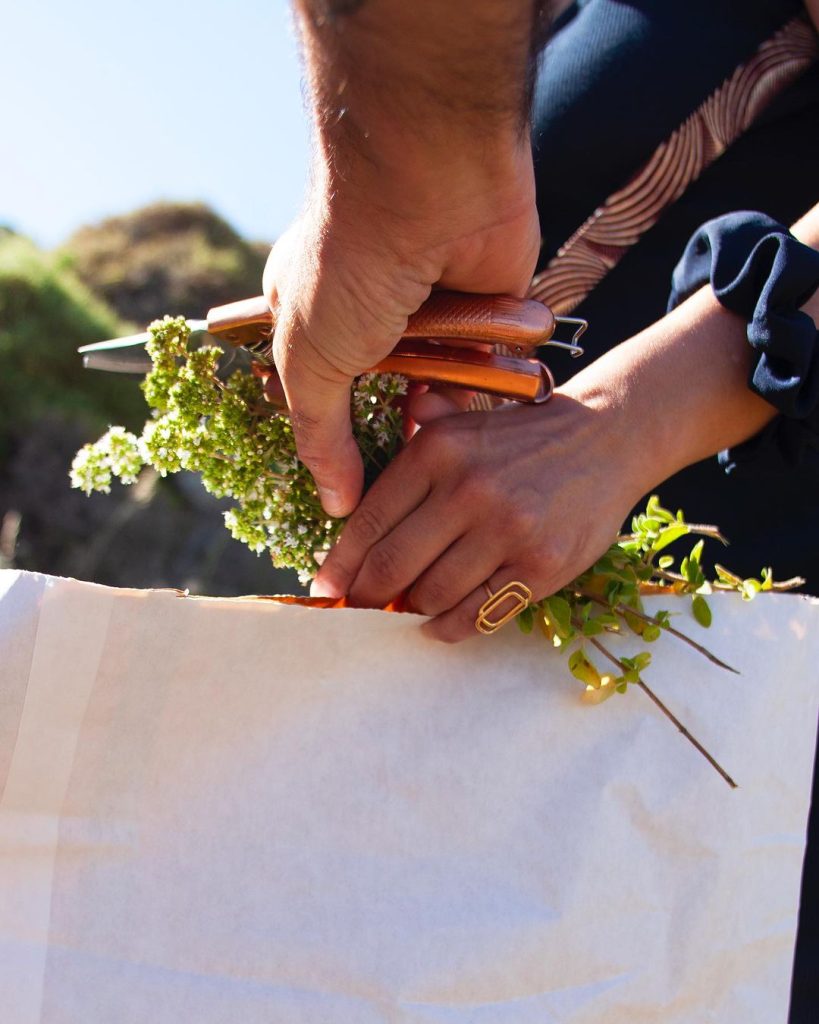
A small-batch culinary herbs and spice purveyor in Athens, all of their products are indigenous to Greece, and up until now, they’ve rarely been available elsewhere. Founder Evangelia Koutsovoulou travels the country for superior herbs, sourcing from small organic farms where she’s on a first-name basis with the growers. Daphnis and Chloe is helping to support the local economy; creating a market for forgotten heirloom varieties; and bringing flavorful ingredients to us, like wild purple thyme flowers, hand-picked sesame seeds, and slow-smoked chili flakes. Check out their products and read more about Daphnis and Chloe on our blog.
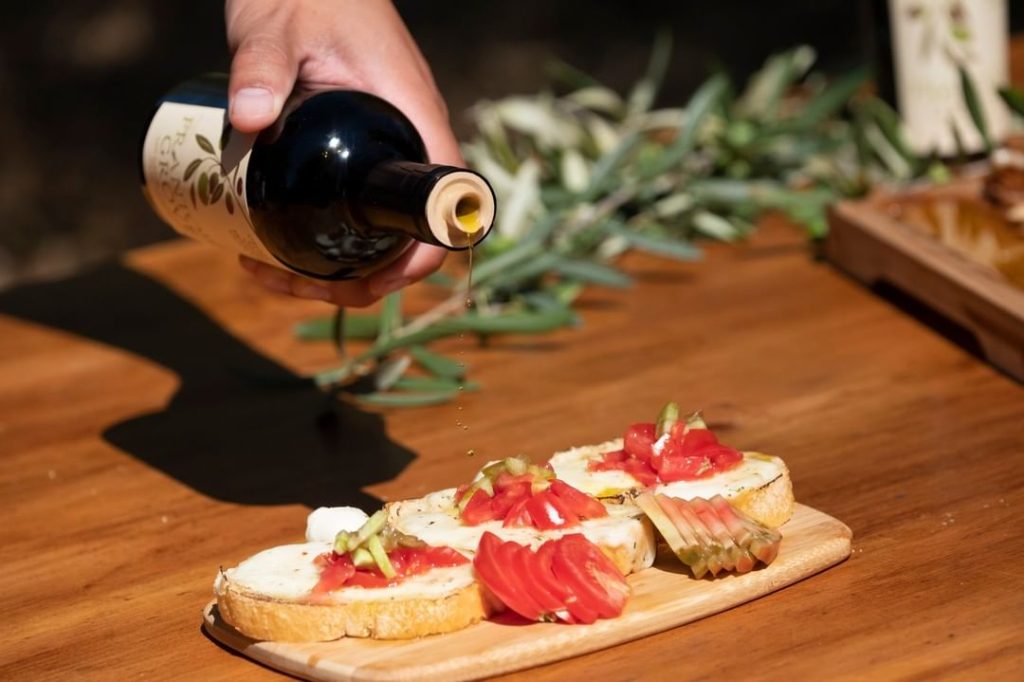
A family-owned olive oil producer with an organic orchard and a state-of-the-art olive mill located in California’s Santa Clara Valley, their name comes from their product. Frantoio is the name of the olive cultivar they grow, it’s originally from Tuscany, Italy. Their goal has always been to create delicious, minimally processed oil, but when a weird weather year resulted in a nonexistent olive crop, they turned to regenerative agriculture to help their trees build resilience to climate change. It’s good for the ecosystem and restores soil health, but it has also created improvements to the quality of their produce, resulting in a more flavorful Olive Oil.
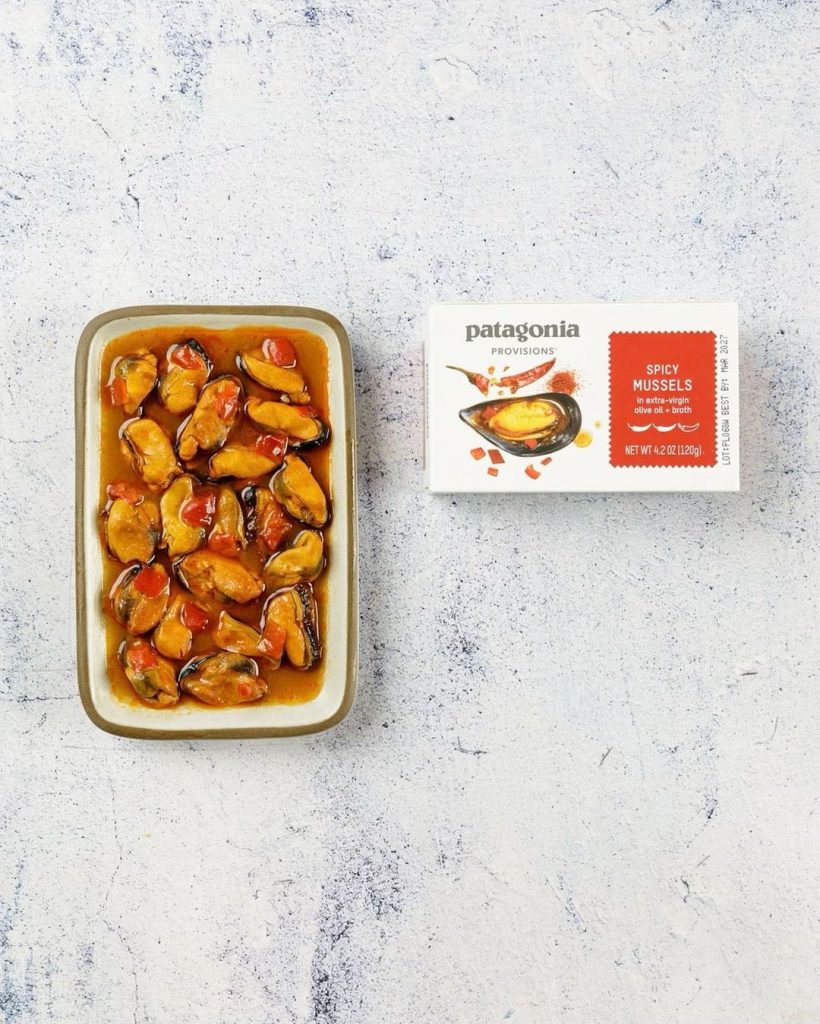
A business venture by yes, the outdoor clothing brand, Patagonia Provisions is taking principles of sustainability and innovation and applying them towards a new kind of future filled with deeply flavorful, nutritious foods that restore, rather than deplete, our planet. In the process, they are developing standards that can be shared and utilized by other producers and supporting research and development projects that have the potential to radically improve the current approach to food production. From sourcing mackerel caught using traditional hook-and-line techniques to making pasta with Kernza®, a revolutionary new grain that prevents erosion and nourishes the soil, supporting planet-positive goals has never tasted so good. Check out their products and learn more about Patagonia Provisions, their Smoked Mackerel, and their Kernza Fusilli on our blog.
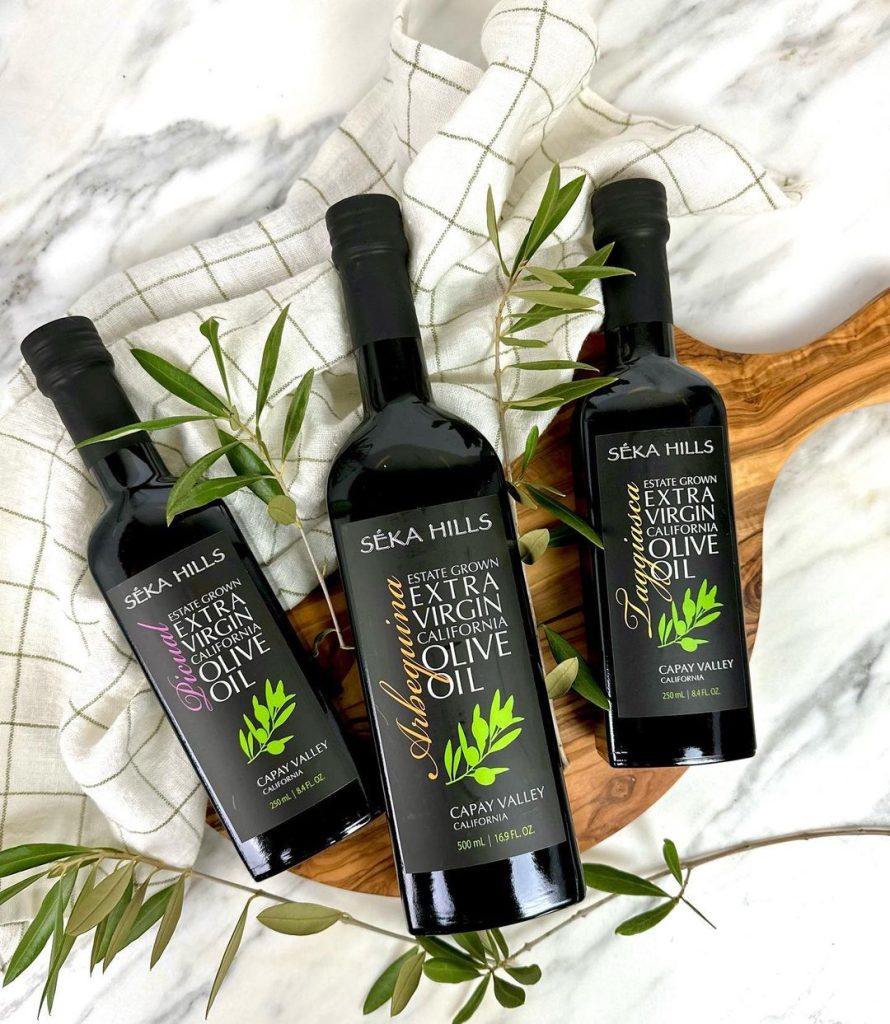
Séka Hills is owned and managed by the Yocha Dehe Wintun Nation, who inhabited the land in Northern California’s Capay Valley for more than 4,000 years. As the historical inhabitants of the land, they are focused on preserving and protecting it for themselves and future generations. Yocha Dehe Farm and Ranch works closely with local and national experts and agencies to employ the newest technologies and best practices in caring for their farmland, rangeland, and water resources, like irrigating their fields with a high-efficiency underground drip system to prevent water waste, placing more than 1,200 acres of their land in conservation easement, and restoring riparian land banks to curb erosion. They own one of the most diverse farming operations in their county, evident in their diverse product line; we carry Séka Hills’ Arbequina Olive Oil, Wildflower Honey, and Beef Jerky. Check out their products and learn more about Séka Hills on our blog.
What began as a zero-waste restaurant in SoHo, New York, is now a best-selling producer that makes incredible avocado oil. This oil is made of African-grown ripe avocados, from farms that use regenerative methods to yield more nutrient-rich and environmentally sustainable produce – plus, it’s delicious! While most avocado oils available on the market are diluted with cheaper oils (avocado making up about 89% of the oil), west~bourne’s oils are 100% avocado. They also use carbon-friendly glass, tree-free paper, and carbon neutral shipments!
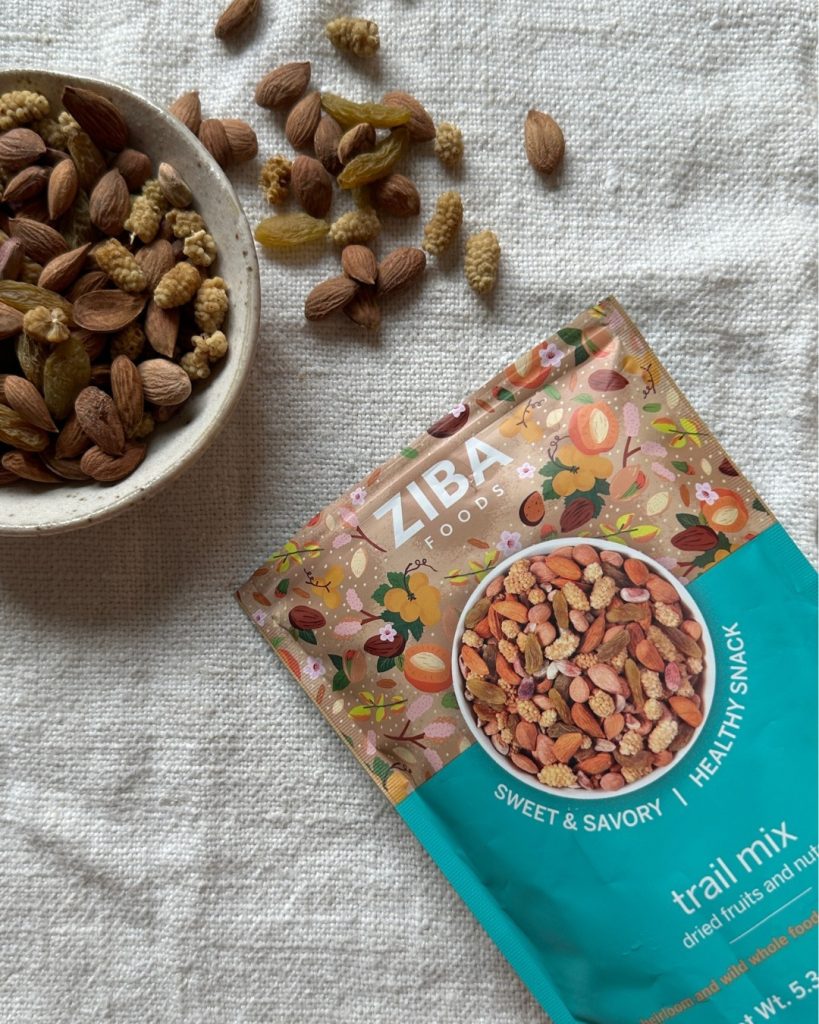
An artisanal nut and dried fruit company based in Afghanistan to bolster the local economy, Ziba Foods is also focused on empowering Afghan women. Their workforce (staff and management) is 80% female, has the security of year-round employment (despite the cyclical nature of the agriculture industry), and has access to educational opportunities, including English lessons and ongoing industry-related training. The farmers Ziba works with follow organic standards—they don’t use synthetic fertilizers, pesticides, or chemicals—and nothing unnecessary is added—no artificial ingredients, no preservatives, no added sugar. Ziba’s only addition is an occasional light dusting of Afghan salt, like on the baby pistachio kernels foraged from the mountainsides of Samangan. And, bonus: Ziba’s dried fruits and nuts are naturally nutrient-dense because they come from heirloom and wild-grown varieties, like sun-dried Kandahar figs and wild-harvested white mulberries. Check out their products and learn more about Ziba Foods on our blog.
The Algarve has been producing and exporting salt since at least the 11th century. At times, Portuguese salt has been called the best in Europe, but in the past century or so the area’s salt production fell prey to the efficiencies of the modern salt makers who switched to lower-cost mechanical drying and industrial production. João and his peers have worked with an older marnoto—those who tend the saltpans—to relearn and then revive, the Portuguese salt traditions of centuries past. They located and restored the old wooden hand rakes and other tools used in production. Their work has helped restore the local ecosystem, aiding in keeping the area’s outstanding birds—egrets, herons, and others—alive and active in the area. They’re focused on staying small, what author Bo Burlingham might call a “Small Giant” in the salt world! “We don’t want to be the salt kings,” João says. They just want to do the right thing. Necton has, over all these years, stayed very progressive in their business practices—staff ownership, ecological focus, profit sharing, etc.
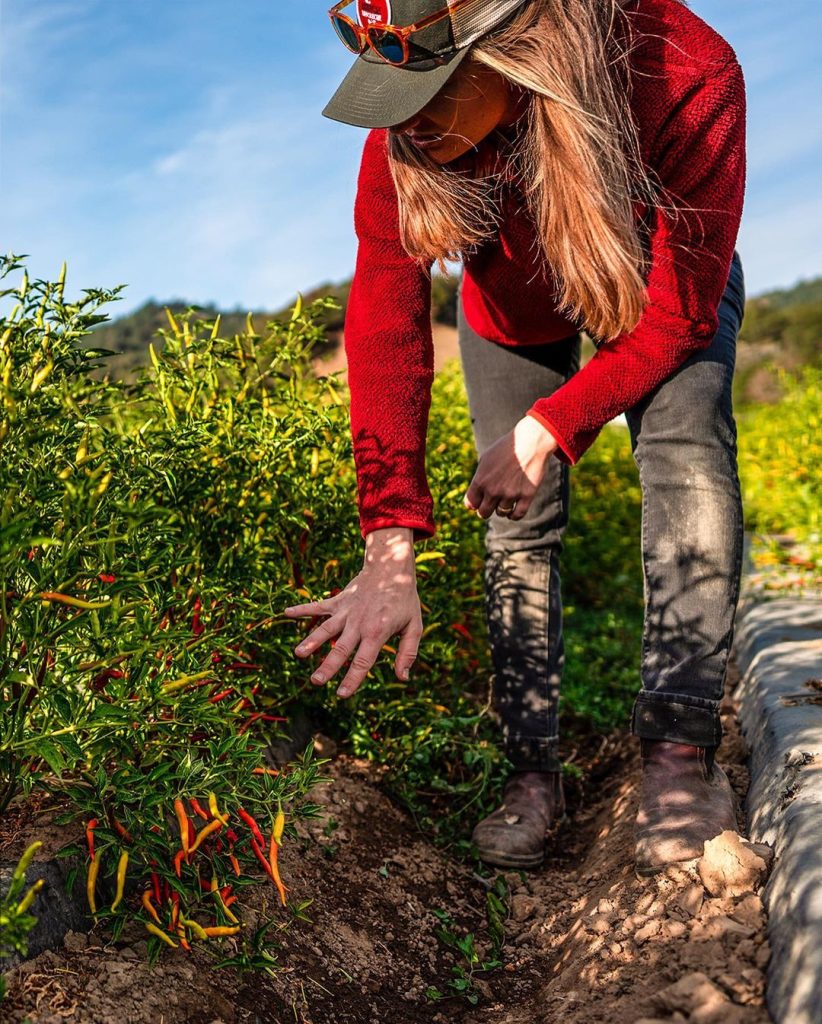
Boonville Barn Collective is a woman-owned farm that’s been producing unique chile powders for 10 years in the resource-rich Anderson Valley of Northern California. Krissy Scommegna, the owner of Boonville Barn Collective, has devoted three of the seven acres her and her team oversee to growing and hand-harvesting Piment d’Ville, their signature version of the coveted Basque Piment d’Espelette, with organic and sustainable farming practices. While working as a chef at the Boonville Hotel and putting Basque Piment d’Espelette on everything, Krissy realized a local option would be better all around from a flavor and cost perspective. That was 10 years ago –they’ve been growing unique chile powders ever since. Thanks to a similar climate to the Basque region with warm days and cool nights, Boonville Barn Collective has become the most significant source for this peppery, sweet, mildly spicy chile powder outside of Europe.
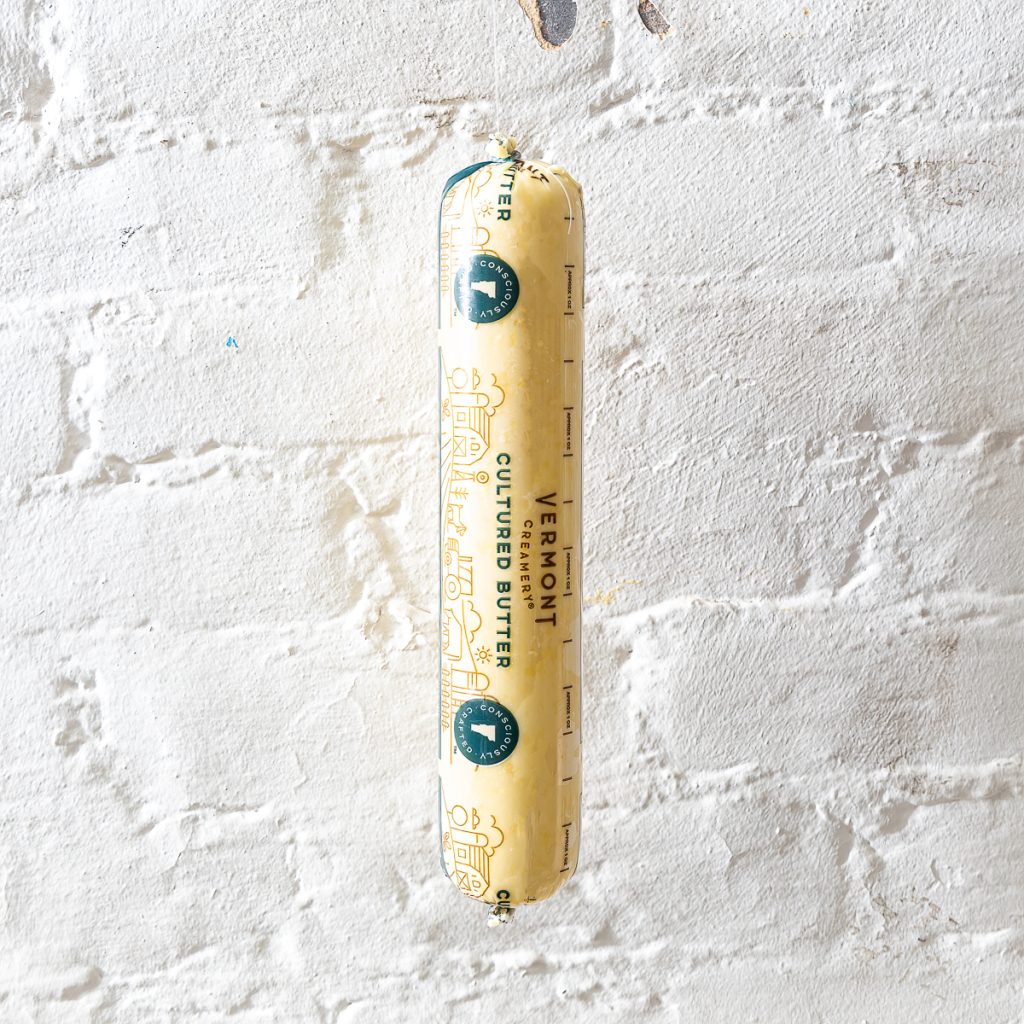
Vermont Creamery is where the Bakehouse gets their incredible butter that they use in so many of their baked foods. Vermont Creamery’s Cultured Butter is made with cream that comes solely from the nearby St. Albans Cooperative. The cream is cultured overnight and only then churned into butter — how all great butter was made 150 years ago, before the advent of refrigeration allowed for a series of cost-saving and flavor-reducing shortcuts. A bit of French sea salt is added, and that’s it. In the spirit of slowness, it takes a lot longer to make the butter in this old way, but you sure can taste the difference. At 86% butterfat, it’s creamy, rich, smooth, and delicious with a lovely long finish.
JK’s Farmhouse Ciders start with apples. But not just any apples. Organically grown, heritage apples (over 50 varieties) from a 5th-generation farm in Flushing, Michigan, just outside of Flint. The land has been in the Koan family since the mid-1800s, and it continues to be a family affair—Jim Koan (…hence JK’s Cider) and his wife Karen work with their son, Zachary, and daughter, Monique. In the 1980s, Jim began the process of converting the orchard to an organic operation. It’s now one of the largest organic orchards in the U.S. and Jim has since become a leader in the field of organic and sustainable agriculture. One of the integral parts of their successful organic orchard management is an unexpected one—a herd of pasture-raised pigs. The pigs originally served on pest management duty in the orchard, eating fallen apples to reduce the impact of a common apple pest. Now, guinea fowl eat the bugs and the pigs happily eat the apple pulp from the cider mill.